The short answer
A sun tunnel gives a soft, even glow, usually enough to light a small windowless room by day without switching anything on. It delivers far less than a roof window of the same width, because the tube carries only a narrow beam. Tube width, length, bends and the way the roof faces decide how bright the room feels.
A glow, not a window
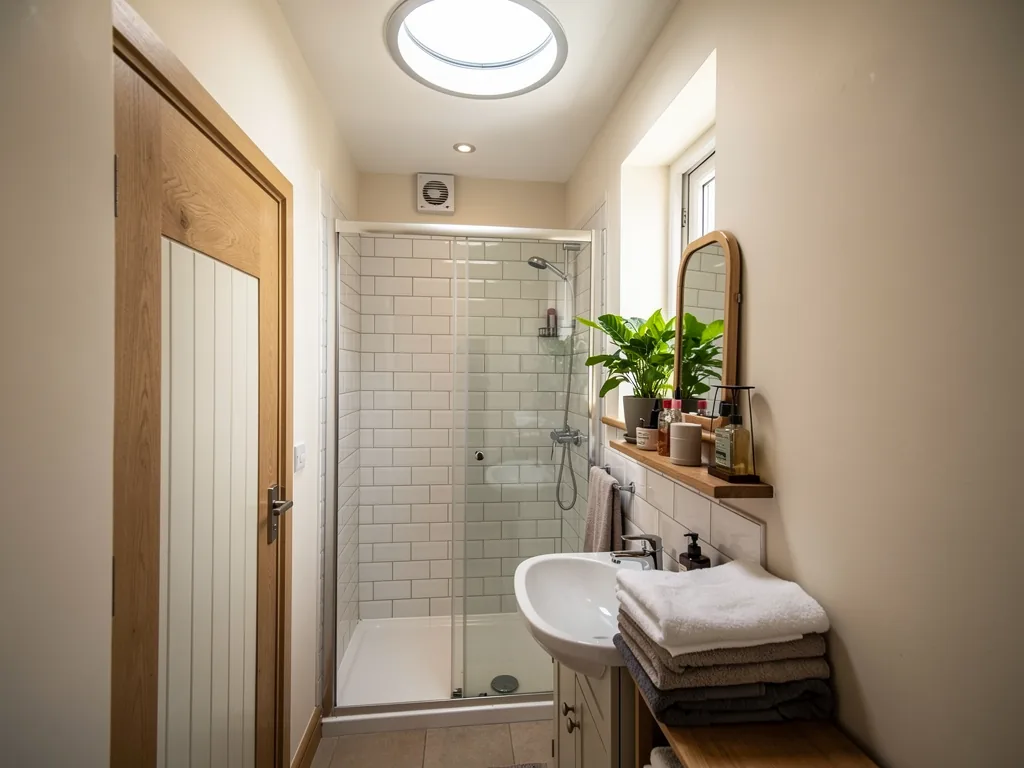
A sun tunnel gathers daylight under a small clear dome set into the roof, then sends it down a mirror-lined tube to a diffuser in your ceiling. What arrives is a wide, soft pool of light, much like a bright ceiling fitting that happens to run on the weather. It does not bring a view, and it does not throw a sharp patch of sun across the floor the way a roof window can.
For a landing, a cloakroom or a bathroom with no outside wall, that is often exactly what is wanted. On an ordinary bright day the room can be used without switching on a lamp. On a grey winter afternoon you will probably still want the light on, but the room will feel less like a cupboard.
Why it gives less than a roof window
A roof window is an opening in the roof, so the whole pane lights the room directly. A sun tunnel squeezes the same daylight through a tube only as wide as a dinner plate or a little more. Some light is lost every time it bounces off the lining on its way down. The shorter and straighter the route, the more of it survives.
That is why a tunnel suits small rooms and a roof window suits large ones. If you are weighing the two for a bigger space, our guide on choosing between a sun tunnel and a roof window sets the trade-offs out side by side.
The four things that change the output
| Tube width | A wider tube collects and carries more light. It also needs a larger opening in the roof and the ceiling. |
|---|---|
| Tube length | A short run through a shallow loft or a flat roof loses little. A long run through a deep roof space loses more. |
| Bends | Every elbow costs some light, so a straight drop beats a route that dodges a beam, a chimney breast or a water tank. |
| Roof direction | A south-facing slope collects most. A north-facing one still works, but the room will be gentler. |
Nothing on that list is a fault. They are simply the things we measure and weigh at the survey, so the tunnel is placed where it will do the most good.
Rigid or flexible
Rigid tubes have a smoother lining and lose less light over the same distance. Flexible tubes bend around obstacles and are sometimes the only way to reach a room, though they scatter a little more of the light as it passes. We explain which suits which loft in our piece on rigid and flexible sun tunnels.
What the room itself contributes
The light that reaches the diffuser is only half the story. A room painted a pale colour will glow from a tunnel in a way a dark green or deep blue room will not, because the walls bounce the light about. A hallway with a white ceiling and light floor will seem noticeably brighter than the same hallway in dark tones.
Furniture matters less in a bathroom than a living space, which is one reason bathrooms and hallways are the classic homes for a tunnel. Our page on sun tunnels for bathrooms and hallways looks at those rooms in more detail.
Light at different times of day
A tunnel is at its best in the middle of the day, when the sun is high and the dome catches the most. Early morning and late afternoon give less, and in the depths of winter the day is short whatever you fit. In summer the glow can be strong enough that the room feels bright to walk into from a dim hall.
Some tunnels can be had with a light kit, an electric lamp inside the diffuser, so the same ceiling opening gives artificial light after dark. That is an option to raise at the survey if the room is used mostly in the evening.
Keeping the glow bright over the years
A dome that is coated in moss, bird droppings or a film of city grime will pass less daylight than a clean one. A quick look from a safe upstairs window now and then tells you whether it needs attention. Inside, the diffuser wipes clean with a damp cloth. Neither task is demanding, but a tunnel left alone for a long time can look duller than it needs to.
Trees matter as well. A dome under a spreading branch spends much of the day in shade, so if you are choosing where the tunnel should go, a spot on the roof away from overhanging growth is worth a thought.
Is the glow enough for your room?
What you get depends on the house. A tunnel is a good match for a small windowless room under a straightforward roof. It is a poorer match for a large room, or for a long, bendy route in a crowded loft. If a tunnel will not do the job, we will say so and suggest something better, such as a roof window, rather than fit something that disappoints.
At the free survey we look at the room, climb into the roof space, and tell you what to expect. You can read the wider picture on our sun tunnel installation page, or see what a fitted tunnel typically costs in our cost guide.
Want to know what a tunnel would do for your darkest room? We can talk it through at the free survey.
Get a free quote