Misted and Failed Rooflight Replacement in York
Clear glass back over the room, with the right fix chosen at a free survey and the house looked after while we work.

- Misted or failed glass replaced
- New sealed unit or whole rooflight
- Building Control notification handled where needed
- Free survey and written quote

Why a failed rooflight gets put off
It looks like a cleaning problem
A grey film inside the glass cannot be wiped away, so the room stays dull while people wait for it to improve.
Nobody knows which fix is right
A new sealed unit suits one frame and a whole new rooflight suits another, and the difference is hard to judge from the floor.
The roof feels like a big job
Quotes that skip the access, the weather and the paperwork make a small job sound alarming.
What goes into a replacement
| Glass | Sealed units with a low-E coating and a warm-edge spacer |
|---|---|
| Room side | Laminated inner pane, our choice for overhead safety |
| Frame | Kept where it is sound, replaced where it is not |
| Plastic domes | Taken out and replaced with a glass rooflight |
| Hidden work | Upstand, flashings and membrane checked and photographed |
| Paperwork | Product details, guarantee and Building Control certificate where notifiable |
A replacement, day by day
- 01
Survey
We look at the glass, the frame and the roof, and agree which fix suits.
- 02
Preparation
Floors covered, access set up, old glass or rooflight taken out.
- 03
Fitting
New unit or rooflight set, hidden work done and photographed, roof made safe.
- 04
Handover
Glass cleaned, waste taken away, paperwork walked through.
On misted glass and replacements
Why does the glass mist inside when it is sealed?
A sealed unit is two panes with a gas-filled gap and a spacer around the edge. Over time the edge seal can let in damp air. When that air cools against the glass, moisture settles in the gap and cannot be wiped off because it is inside. The mist is the sign the seal has gone, and no amount of cleaning outside or in will clear it.
Can only the glass be changed, or must the whole rooflight go?
Either can be right. If the frame is square, sound and sits well on its upstand, a new sealed unit may be all that is needed. If the frame is cracked, warped, leaking at the corners or made of plastic that has yellowed, a whole new rooflight is the better answer. We look at both at the survey and the quote shows the choice.
Will replacing a rooflight need Building Control?
Replacing the entire rooflight, frame included, is a controlled fitting and is notifiable, and we arrange the notification. Swapping a sealed glass unit alone is not notifiable. Our survey notes say which of the two your job is, and what paperwork you will receive at handover.
Is there a mess inside the house?
The room below is cleared or covered, floors and stairs along the route are protected and a screen goes round the work area when the layout permits. The old glass is lowered out carefully and taken away with the rest of the waste. Every evening before the team leaves, the roof is made weathertight.
The whole job
Everything involved in replacing a failed rooflight properly
How glass fails, how to tell which fix you need, the rules that apply, the access, the fitting day, and what you are handed at the end.
What you are seeing
A grey film in the glass, and what it tells you
Replacing misted rooflights in York begins with understanding that the cloud you can see is not dirt. It has formed inside a part of the window that was meant to stay dry for good.
Most rooflights fitted in the last few decades use sealed double glazed units. Two panes are held apart by a spacer, the gap between them is filled with dry air or gas, and a seal runs round the edge to keep it that way. While the seal holds, the glass stays clear. When it fails, damp air finds its way into the gap, and on a cool morning or after rain the moisture condenses on the inside faces of the glass. You see it as a milky haze, a ring of droplets or a streaky film that comes and goes with the weather.
It is easy to mistake this for a dirty window and spend a weekend with a ladder and a bottle of cleaner. The haze stays where it is, because it is on the wrong side of the glass to reach. That is the first thing to settle, and it is usually obvious within a minute of looking from both sides.
How to tell misting from dirt
- Wipe the room side and the outside: if the haze does not move, it is in the gap
- Look at it on a cold morning, when the mist is often at its worst
- Check whether it clears a little in warm, dry weather and returns later
- Notice whether it sits near the edges first, where the seal has given way
- Compare with a neighbouring rooflight, if there is one, that looks clear
If that matches what you see, the glass has failed and the remedy is new glass. Our guide to how to tell a rooflight is failing lists the other symptoms worth knowing about, including a few that have nothing to do with the sealed unit.
Why it happens
How a sealed unit comes to fail
Nothing dramatic happens to a failing unit. It simply ages in a harder place than a window in a wall.
A rooflight takes more punishment than any other glazing in the house. It faces the sky, so it gets the full sun on a July afternoon and a hard frost on a January night. The glass expands and contracts through that cycle, thousands of times, and the edge seal has to flex with it. Rain and standing water sit against the lower edge of a low-pitched rooflight rather than running away. A unit that was marginal when it left the factory, or one that has simply done its time, eventually lets go.
Frames add to the strain. A timber or metal frame that has moved slightly, or an upstand that has settled, puts a twist into the unit that the seal was never designed to take. That is why some rooflights mist in one corner first and then spread across the pane. If the frame is the cause, changing the glass without looking at the frame only buys a short reprieve, which is why we look at both before suggesting anything.
The mist is the symptom. The edge seal or the frame holding the glass is the thing to look at.
From a survey in Haxby
Our answer to why is my rooflight misted between the panes goes through the causes in more detail, including why a unit can mist in a house that is otherwise well ventilated.
Two ways forward
A new sealed unit, or a whole new rooflight
There are two honest routes to clear glass, and the right one depends on the frame rather than on the glass.
The first is a new sealed unit set into the existing frame. The old glass comes out, the rebate is cleaned, and a new unit made to the measured size goes in with fresh glazing gaskets or sealant. This leaves the frame, the upstand and the roof covering undisturbed, so it is quicker and keeps the cost down. It suits a frame that is square, solid and weathering well, where the only fault is the glass itself.
The second is a whole new rooflight. The frame comes off its upstand, the upstand is checked and brought up to standard if it needs it, and a new rooflight with its own frame and glass is fitted and weathered into the roof. This is the answer when the frame is cracked, bowed or corroded, when a plastic frame has gone brittle, or when the old unit has no insulation worth keeping. It costs more and takes longer, but it gives a new frame, new weathering and a rooflight that meets today's thermal standard.
| Frame sound and square | A new sealed unit is usually enough |
|---|---|
| Frame cracked, warped or corroded | A whole new rooflight |
| Corners letting water through | A whole new rooflight, with the upstand checked |
| Several units misted in one roof | Often a sign the frames are the same age, so look at them together |
| Plastic dome or sheet | Replaced with a glass rooflight, not reglazed |
| Building Control | Whole rooflight notifiable; sealed unit alone not |
We set the choice out in our guide to a new sealed unit or a whole new rooflight, with the questions to ask of any quote you are given.
Clearing it
Can a misted rooflight be cleared without replacing the glass?
People ask this first, and it deserves a straight answer before anyone spends money.
Once the gap between the panes has taken in moisture, the seal has already failed. Drying the gap out does not close the leak that let the moisture in. Anything that works at all is temporary, and the haze returns the next time the weather turns. Some firms offer to drill the glass and fit a vent, or to inject a drying agent. We would rather you knew the glass is at the end of its working life, because even a cleared unit will have lost its insulating gas, and a rooflight with a failed unit is losing heat all year.
That does not mean every misted rooflight is urgent. A unit that has misted slightly in one corner can sit there for a long time without causing trouble beyond the look of it. If the room is a landing, a store or a space you rarely use, deferring the job is a reasonable choice. We would only urge you not to wait if the glass is cracked, if water is coming in, or if the room is one where the dullness is wearing on you every day.
When it is sensible to wait, and when it is not
- Light mist in one corner of a rarely used room: usually fine to wait
- A frame that is sound and a unit that has hazed evenly: plan the job when convenient
- Water marks on the ceiling or reveal beneath: arrange a survey soon
- Cracked or chipped glass in an overhead position: do not leave it
- A room you want to use more, such as a kitchen or a study: the glass is worth doing now
Our answer on whether a misted rooflight can be cleared covers the drilling and drying methods and why we do not recommend them.
Plastic domes
Old plastic domes and sheets, replaced with glass
A yellowed plastic dome on a felt roof is a failed rooflight of a different kind, and reglazing it is not the answer.
Many bungalows, extensions and outbuildings around York were fitted in the 1970s and 1980s with moulded plastic domes or flat polycarbonate sheets over a timber kerb. After decades of sunshine the plastic turns yellow, goes brittle and sometimes cracks. It also has poor insulation, which is why the room below feels cold in winter and why condensation runs down the inside of the dome. There is no sealed unit to replace, so the whole rooflight goes.
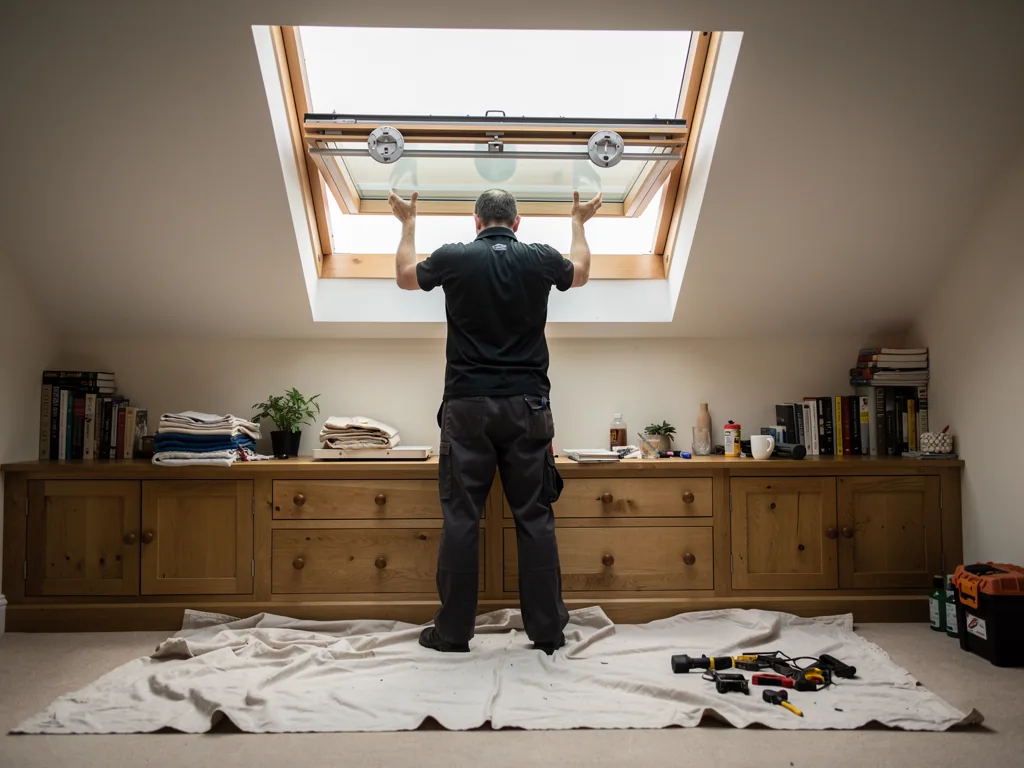
In its place goes a glass rooflight on a properly insulated upstand. The old kerb is often too low, too thin or unsound, so it is checked and either rebuilt or raised to give a clear height above the finished roof. The roof covering is dressed up the outside of the new upstand and sealed beneath the frame, and the inside of the opening is lined and finished. The result is a rooflight that is warmer, clearer and long lasting, instead of one more plastic dome waiting for its next winter.
Because the frame and glass are both new, this is a controlled fitting, and we arrange the Building Control notification. We cover the swap in more depth in our guide to replacing a polycarbonate rooflight with glass.
The survey
What we look at before saying which fix you need
The survey is free, and the visit is mostly about the frame, the roof around it and the way the old glass is held.
We start from inside, looking up at the unit from the room, then go onto the roof or use an access tower so we can see the frame at close quarters. We measure the rebate, the width and length of the glass and the thickness of the unit, because a replacement has to match the opening to the millimetre. We read any markings on the old unit, check the condition of the gaskets or sealant, and look for signs of water on the frame and on the upstand.
We then look at the roof covering where it meets the rooflight, because that is where a replacement can go wrong if the weathering is tired. Felt that has split at the upstand, or lead that has lifted, tells us the roof around the rooflight may need work as well, and we say so, with a separate line on the quote, rather than leaving it as a surprise after the glass is in.

What we write down at a survey
- The exact size and thickness of the existing glass and its frame
- Whether the frame is timber, metal or plastic, and its condition
- The state of the gaskets, beads and sealant
- The height and construction of the upstand beneath
- The roof covering where it meets the rooflight
- How we will reach the roof safely, and where the glass will go
What you receive afterwards is the verdict and our reasoning on paper, every charge itemised separately, together with a plan for each day of the fit.
Choosing the glass
What the new glass should be
A replacement is the one chance to fix whatever you disliked about the old glass, whether that was the glare, the cold or the noise.
Modern sealed units are a long way ahead of the ones they replace. A low-emissivity coating on one pane reflects heat back into the room, a warm-edge spacer cuts the cold line round the perimeter, and the gap is filled with argon. Together they bring a rooflight close to the thermal performance the regulations expect today. On a south or west facing roof, a solar control coating takes the sting out of summer afternoons. A dirt-shedding coating on the outer face lets rainfall rinse the glass between washes.
On the room side, we choose a laminated pane. Laminated glass is our own choice for overhead panes rather than a rule, and we think it is sensible above a table, a hob or a bed. If the inner pane were ever broken, the interlayer would hold the pieces together instead of letting them fall.
| Coating | Low-E on the inner pane of the sealed unit |
|---|---|
| Spacer | Warm-edge, to reduce the cold line round the glass |
| Gas fill | Argon in the cavity |
| Inner pane | Laminated for overhead safety |
| South and west roofs | Solar control coating worth considering |
| Outer pane | Optional self-cleaning coating |
If your rooflight has been cold or glaring for years, it is worth reading about energy efficient rooflights before the survey, so you can ask for the glass that fixes the thing that bothers you.
The rules
Building Regulations, planning and your replacement
Replacing glass sounds like maintenance, and the rules do treat part of it that way. The other part is a notifiable job, and we handle it.
The dividing line is simple. Replacing only the sealed glass unit in a frame that stays is not notifiable. Swapping out the entire rooflight, frame included, is a controlled fitting, so the work has to be notified to Building Control, either the council or a registered building control approver. We arrange that, tell you which route applies, and give you the completion certificate at handover.
The same replacement must meet the thermal limits in Part L for existing homes. A rooflight needs a U-value of 2.2 W/m²K or better, and a roof window, which sits in a pitched roof, needs 1.4 W/m²K or a Window Energy Rating of Band B. Planning is rarely a worry when you are putting back what was there. Rooflights on houses are usually permitted development provided they stand no more than 150mm above the roof plane, and a like-for-like replacement of the same height rarely changes that. The exceptions are listed buildings, which need listed building consent, flats and maisonettes, which have no permitted development rights, and streets where an Article 4 direction has removed them. The full list of conditions is in the skylight planning permission guide.
| Sealed unit only | Not notifiable |
|---|---|
| Whole rooflight | Notifiable controlled fitting; we arrange it |
| Rooflight thermal limit | 2.2 W/m²K |
| Roof window thermal limit | 1.4 W/m²K or Band B |
| Listed building | Listed building consent |
| Flat or maisonette | Planning permission needed |
Each case is worked through in is replacing a rooflight notifiable, which goes through the cases one by one, including what happens when you change the size.
Getting to the roof
Access: ladders, towers and scaffolding
Glass is heavy and awkward, and where the rooflight sits decides how it gets in and out.
A small unit on a low flat roof may be reached with a ladder and a sound footing. A larger unit, a rooflight on a second storey extension or one on a steep pitch needs more. The choice is between an access tower, which is quick to put up and gives a stable platform beside the roof, and scaffolding, which is worth it when the work is large, the roof is high or several units are involved. We decide at the survey, tell you which we expect to use and show it as its own line on the quote if it adds a cost.
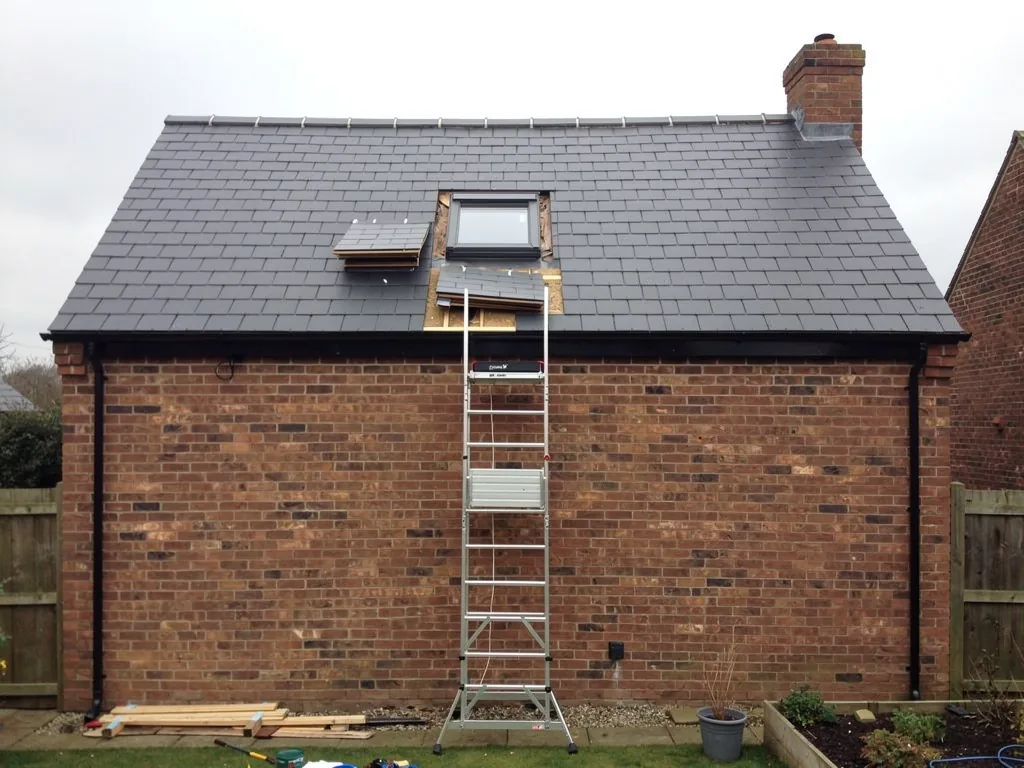
Large sealed units can weigh more than one person should lift alone, so we plan how each unit will be passed up, how the old one will be lowered, and where it goes afterwards. If the route from the road to the roof crosses a drive, a flower bed or a neighbour's boundary, mention it when we visit and we will route around it. Our answer to whether you need scaffolding to replace a rooflight explains when a tower will do and when it will not.
Your day plan
What the fitting looks like in your home
A sealed unit swap can be done in a day. A whole new rooflight takes a few. Either way you will know the order of things before we begin.
Before we touch the roof, the room below is cleared as far as you wish and the rest is covered. Floors and stairs along our route are protected, and a screen goes up round the work area where the layout allows. Old glass is heavy and sharp, so it comes out carefully and goes straight into a container rather than being stacked in a hallway. Dust is limited, because we are mostly lifting and setting rather than cutting.
A typical replacement
- ProtectRoom covered, floors and stairs protected, access set up outside.
- RemoveOld glass or whole rooflight lifted out and taken away.
- FitNew unit or rooflight set, upstand and flashings checked, hidden work photographed.
- FinishWeathering completed, glass cleaned, dust sheets lifted, handover.
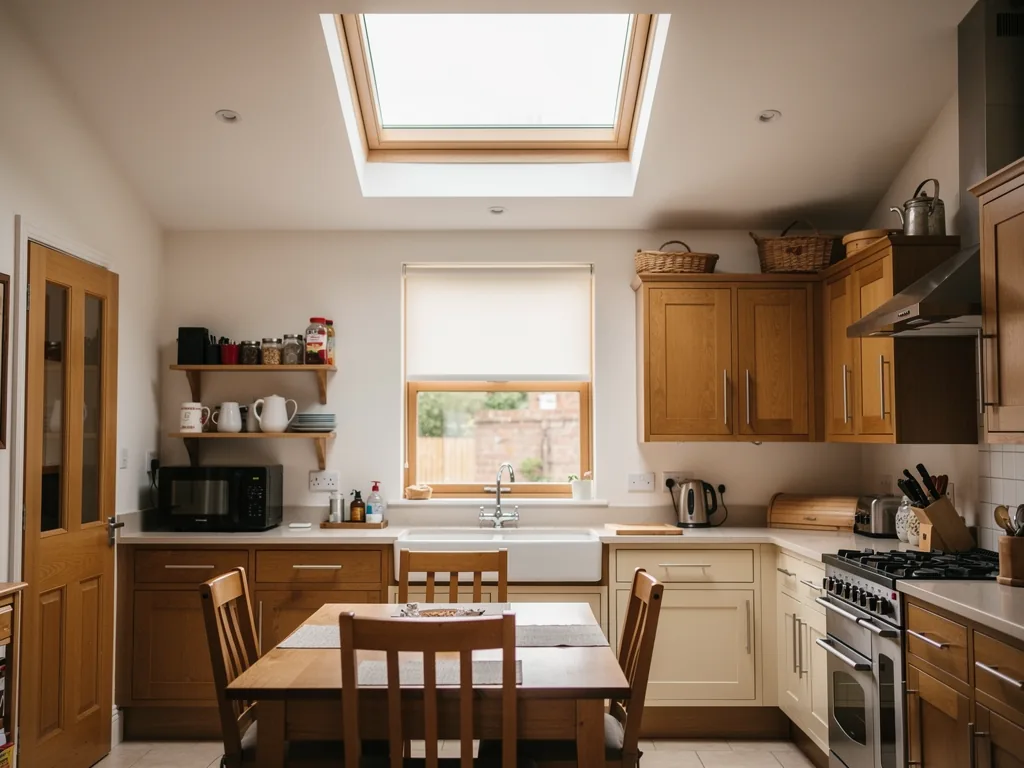
Before the team goes home the roof is closed in, so no opening is left to the weather overnight. If the weather is poor on the planned day, we move it rather than take a chance. If you work from home, have a child due a nap or a delivery on the day, tell us beforehand.
Hidden work
The parts you will not see again
When the glass comes out, the frame, upstand and weathering are in plain view for the only time in years, and that is when they get attention.
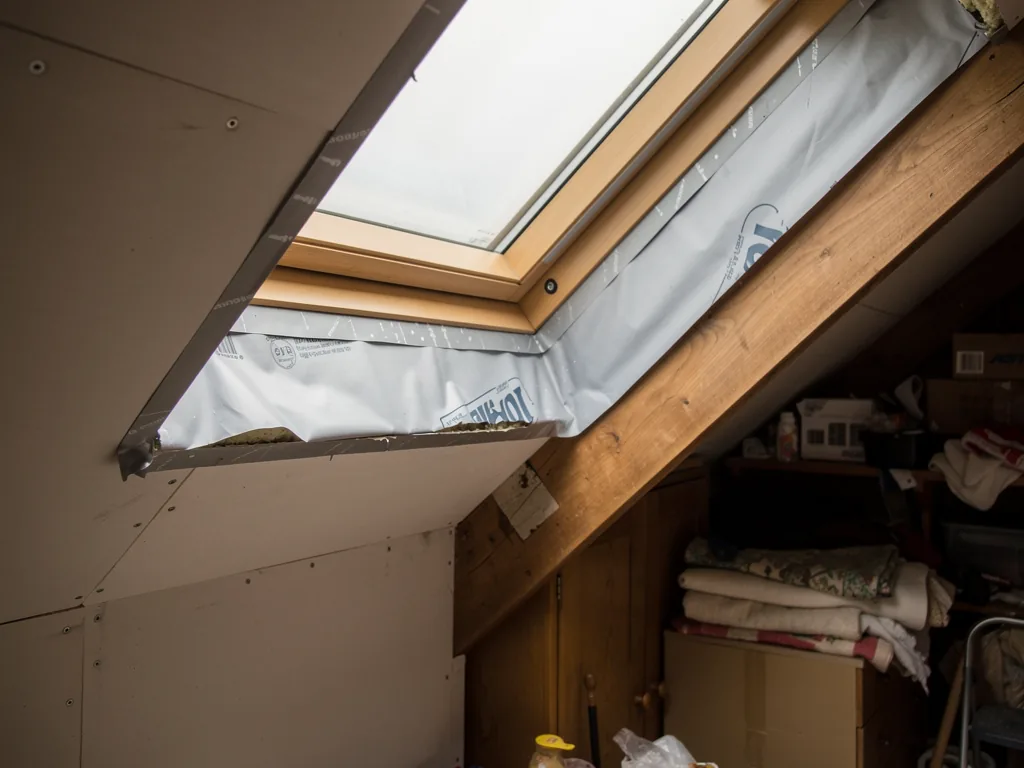
We use the open roof to look at the layers that carry the rooflight: the timber upstand, the insulation behind it, the flashings and the covering dressed up the outside. If a flashing has lifted, a timber has softened or the insulation has gone missing, it is far better to find out with the glass out than to close it all in again and hope. Where something needs doing, we explain what and why, and the quote shows the extra as its own line.
Where the whole rooflight is new, the upstand gets its insulation and membrane built properly, and each stage is photographed before it is covered. You are given the photographs at handover, so there is a record of what lies beneath the finish.
Checked while the roof is open
- Soundness of the timber upstand or kerb
- Insulation lapped between the upstand and the roof
- Flashings and the covering dressed against the frame
- Ventilation and condensation marks on the lining
- Fixings holding the frame to the structure
Your house
Misted rooflights on the homes around York
The pattern of failure follows the age of the house, so the sort of home you have says a good deal about what the survey is likely to find.
In the Victorian and Edwardian terraces of South Bank and the Groves, the rooflight is often over a back-addition kitchen or a stair, added in a later renovation. Those units can be old, but the frames are frequently sound timber, and a new sealed unit is often the right answer. On 1930s semis in Acomb and Dringhouses, loft conversions from a few decades ago often have roof windows with failed units, and the choice there is a sealed unit or a new roof window, depending on the frame.
In villages such as Haxby, Strensall and Copmanthorpe, bungalows and chalet bungalows often have a flat-roofed extension with an older dome or a flat rooflight in a timber kerb. Domes are replaced; flat rooflights depend on the frame. Where a lantern has misted, our roof lantern installation page covers replacing the whole structure. For a flat rooflight that has had its day, the flat roof rooflights page shows what a new one looks like.
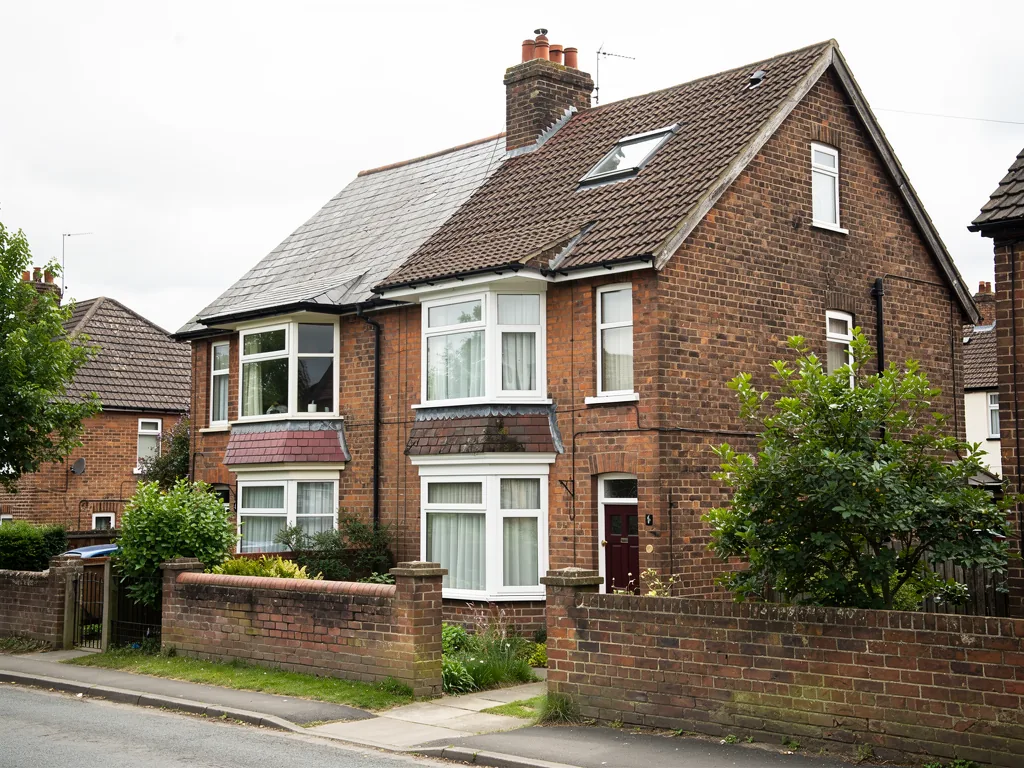
What the house type tends to mean
- Terraces: sound timber frames, so a new unit may be enough
- 1930s semis: roof windows that may need a whole replacement
- Bungalow extensions: plastic domes swapped for glass rooflights
- Conservation areas: check an Article 4 direction before changing size or style
- Listed buildings: consent first, whatever the glass is doing
How long it lasts
How long a unit lasts, and what drives the cost
Neither the age of the glass nor the price of replacing it can be given as a single number, because both depend on the roof.
A sealed unit has no fixed lifespan. A well made unit in a well supported frame on a sheltered roof can last for a long time, while one on an exposed south face, or in a frame that has moved, may fail much sooner. What we can say is that failure is a matter of when, not whether, and that the signs appear gradually. Our answer on how long a rooflight sealed unit lasts sets out what shortens and extends life.
Cost follows the same logic. We price from a survey and list each element separately, so you can check what you are paying for and compare it fairly with any other quote.
| Size of the glass | Larger units cost more to make and need more hands to fit |
|---|---|
| Route chosen | A whole rooflight costs more than a sealed unit alone |
| Glass specification | Solar control, triple glazing and coatings add to the unit cost |
| Access | A tower or scaffolding adds a line where needed |
| The roof around it | Tired weathering or a poor upstand adds work |
| Interior finish | Lining and plastering the reveal, if the opening changes |
The guide to what it costs to sort a misted rooflight explains each factor and what a fair written quote should include.
Handover
When it is finished: clean glass and the paperwork
The glass is clear, the room is tidy and there is a folder on the table. That is how we want every replacement to end.
The last job is to clean the new glass, lift the dust sheets and take the waste away. We then walk through the finished work with you, show what was done, how to look after the glass and what to expect over the first weeks. A new unit may show faint condensation on the outside face on a cold, clear morning. That is the glass doing its job by keeping the heat in, not a sign of failure.
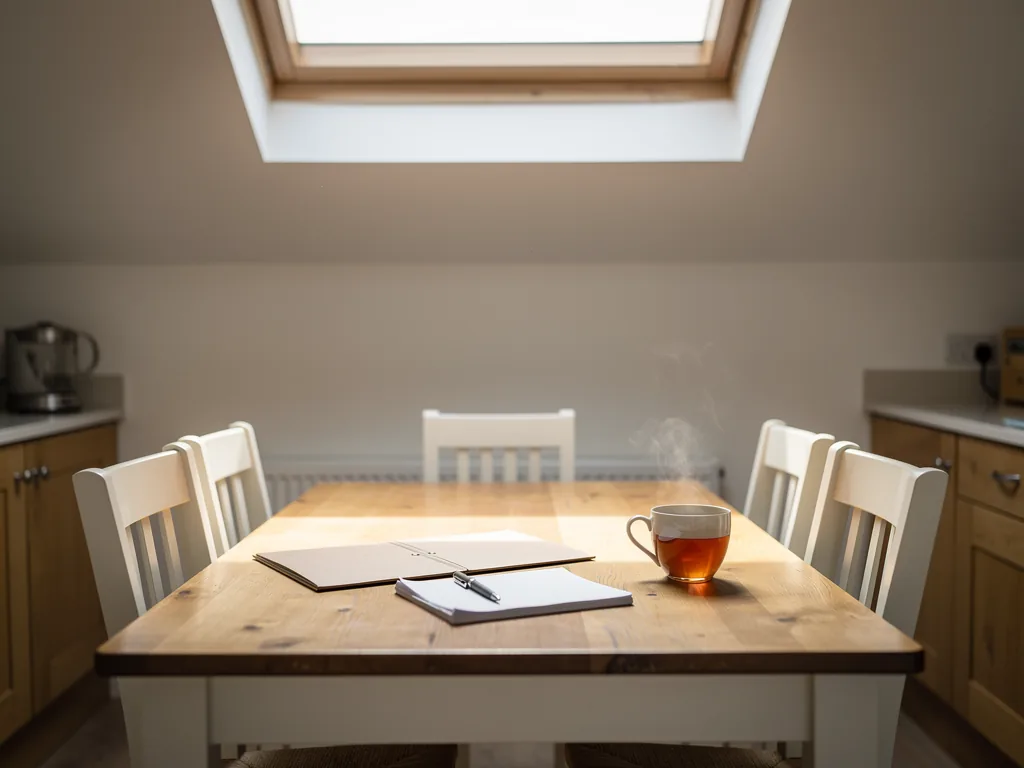
What you are handed
- The maker's warranty and product details for the glass or rooflight
- Your workmanship guarantee, which runs ten years, as a signed document
- The Building Control certificate, where it applied
- Photographs of the hidden work before it was covered
- Simple care notes for cleaning the glass
The guarantee covers our workmanship: the fitting, the weathering into your roof and the finish. You can read it on the guarantee page. To start, use the form below and tell us about the rooflight, or return to the full list of services if you want to compare options first.
Read more about misted and failed rooflights
Guides
Tell us about the rooflight
Send a few details and a photograph of the glass if you can, and we will book a free survey and write up a quote for the replacement.
- Free survey at a time that suits you
- A written quote and a plan for each day
- 10-year workmanship guarantee
Prefer a message? WhatsApp us on 07880 284133