Energy Efficient Rooflights in York
Glass that keeps the room comfortable in January and July, fitted with the house protected and handed over properly.

- Low-E coated, gas-filled glazing
- Thermally broken frames
- An insulated collar or upstand
- Building Control notification handled

Where a rooflight gives its warmth away
Glass is the thinnest part of the roof
A rooflight is a hole in a well-insulated roof, so the glass and frame need to do the work the insulation would have done.
A cold edge invites condensation
Where the frame is cold, damp room air settles on it, and the stain and mould that follow are the first sign of a poor fit.
The gap round the frame
A product's rating means little if the insulation around it has gaps, so the packing and membrane matter as much as the glass.
What we specify for a warmer rooflight
| Glazing | Double or triple sealed units, argon-filled, with a low-emissivity coating |
|---|---|
| Spacer | Warm-edge spacer bar around each sealed unit |
| Frame | Thermal break in aluminium, or multi-chamber uPVC or timber |
| Inner pane | Laminated glass on the room side for overhead safety |
| Surround | Insulation collar or upstand, with a continuous vapour control layer |
| Paperwork | Product details, makers' warranties, 10-year workmanship guarantee and Building Control certificate |
Your fitting, day by day
- 01
Survey
We check the roof, the existing insulation and the rating you are aiming for.
- 02
Opening
Floors covered, the old unit out, new trimmers in, the roof made weathertight.
- 03
Glazing and insulation
The new unit set, the collar packed, the membrane taped and photographed.
- 04
Finish and handover
Lining completed, the area cleaned, every document walked through.
Warmth, glass and rating
What U-value does a new rooflight need to reach?
Under Part L 2021 for existing homes, a new roof window should achieve 1.4 W/m²K or Window Energy Rating Band B, and a rooflight 2.2 W/m²K. Those are the limits when a whole unit is replaced or added. Many products beat them, and we give you the figure for the exact product in your quote so you can compare like with like.
Will triple glazing pay for itself in a rooflight?
It depends on the room and on how you use it. A bedroom or living room occupied on winter evenings gains more from the extra pane than a utility room used briefly. Triple units are heavier and let in slightly less light, so we talk through the trade-off at the survey and show you both samples side by side.
Can I keep my old frame and only upgrade the glass?
Sometimes. If the frame is sound and a modern sealed unit fits it, a glass-only swap is possible, and it is not notifiable on its own. If the frame is cold, warped or sealed with failed gaskets, a whole new unit gives a better result and is notifiable, so we arrange the paperwork.
Why does my rooflight run with water on cold mornings?
That is condensation: warm, damp room air meeting a cold surface. A better inner pane and a warmer frame help, and so does ventilation. The survey looks at the glass, the frame edge and the room, because the cure depends on which of the three is the cause.
The whole job
Everything that makes a rooflight keep its heat
Reading a U-value, choosing the glass, the frame and the surround, the rules, and how each day of the swap goes in your house.
The idea
What makes a rooflight energy efficient
An efficient rooflight is one that lets daylight in while keeping the heat you have paid for inside, and the rating on the box is only part of how well it does that.
Four things decide how a rooflight behaves once it is in the roof. The glass sets the base figure. The frame and the spacer bars carry heat around the edges of the glass. The insulation and membrane around the opening decide whether the product's rating survives contact with your actual roof. And the way the room is used, ventilated and heated decides whether you notice the result as comfort or as a damp patch on the lining.
Most people start by asking for the best number. It is a fair start, but a lower figure on paper does nothing if the opening is badly packed, and a modest product fitted with care can outperform a better one fitted carelessly. Our survey looks at the whole chain, then the written quote names each part of it so you can see what you are paying for. If you are still deciding which kind of unit suits the house, the full range sits on our services page.
The four parts of the picture
- The glass: panes, gas fill and coatings
- The edges: spacer bar and frame material
- The surround: insulation, collar or upstand, air seal
- The room: humidity, heating and how you use it
Reading the figures
U-values, and what the number leaves out
A U-value tells you how quickly heat passes through one square metre of a material for each degree of difference either side, so lower means warmer.
The unit is watts per square metre per kelvin, written W/m²K. A single pane of old glass sits near the top of the scale. A modern sealed unit with a coating and a gas fill sits far lower. When you compare two rooflights, the thing to ask is which figure you are being shown. Some makers quote the centre of the glass alone, which flatters the product because the edges lose more heat than the middle. Others quote the whole window, glass and frame together, which is the figure that counts.
Roof windows in pitched roofs have a second rating, the Window Energy Rating, which scores the product from A to G and takes account of heat gained from the sun as well as heat lost. Part L accepts Band B or better for a roof window in an existing home. Flat rooflights and lanterns are judged on U-value alone.
| Centre-pane U-value | The glass alone, so the best-looking number |
|---|---|
| Whole-window U-value | Glass, spacer and frame together, the one to compare |
| Window Energy Rating | A to G for roof windows, counting solar gain as well as heat loss |
| Light transmission | How much daylight passes through, which falls a little with extra panes |
| Solar gain figure | How much of the sun's heat the glass lets in |
Our guide to rooflight U-values walks through the figures with worked examples.
The glass
Double glazing, triple glazing and the gap between
Each extra pane adds a layer of still gas and a surface that heat has to cross, which is why the third pane makes such a difference on paper and so little in a room that is hardly used.
A double unit has two panes with a sealed cavity between them, filled with argon, which conducts heat more slowly than air. A triple unit has three panes and two cavities. The result is a lower whole-window figure, a warmer inner surface and a little more protection from rain noise. The cost is weight, thickness and a slight dip in the light that gets through, since every pane absorbs and reflects a small amount.
Where we advise triple glazing, it is usually for a room that is occupied in the evening and early morning, such as a loft bedroom, a sitting room or a home office, where the inner glass is something you sit under. For a landing, a utility room or a pantry, a good double unit does the job and leaves more of the budget for the parts you cannot see. We bring both samples to the survey and let you hold them.
| Panes and cavities | Double: two panes, one cavity. Triple: three panes, two cavities |
|---|---|
| Whole-window warmth | Triple gives the lower U-value |
| Daylight | Double lets slightly more through |
| Weight | Triple is heavier, which matters on big rooflights and opening ones |
| Sound | Triple softens rain noise a little more |
| Best suited to | Triple: rooms used on winter evenings. Double: rooms used briefly |
The longer comparison is in double or triple glazed rooflight, with the arguments on both sides.
Coatings and edges
The coating on the glass and the bar at its edge
Two details that you will never see once the rooflight is in do a surprising share of the work: a microscopic coating on one pane and the spacer bar that holds the panes apart.
Low-emissivity glass carries a thin metal-oxide layer on one inner surface. It lets short-wave sunlight pass through but reflects the long-wave heat that radiates from the warm room, sending it back in. The coating sits inside the sealed unit where it cannot be scratched, and the glass looks clear. On a roof glazing, which faces the cold sky at night, that reflected heat counts for a great deal. There is a separate short answer on what low-E glass is if you want the coating described step by step.

The spacer is the strip around the perimeter of the unit that keeps the panes apart and holds the gas in. A traditional aluminium spacer is an efficient conductor, so it makes a cold line around the edge of the glass, exactly where condensation likes to start. A warm-edge spacer is made of a less conductive material, which lifts the temperature of that edge. The difference shows in the whole-window figure and in how clear the glass stays on a cold morning. Read more in what a warm-edge spacer is.
Details to look for on a quote
- Low-E coating named, with the pane it is on
- Gas fill stated as argon
- A warm-edge spacer rather than bare aluminium
- The whole-window U-value, not only the centre-pane figure
The frame
Frames: where heat escapes sideways
Glass makes up most of a rooflight's area but the frame is a continuous path from the cold side to the warm side, and it needs to be designed to interrupt that path.
Aluminium conducts heat very well, so an aluminium rooflight frame needs a thermal break: a strip of insulating plastic that separates the outer section from the inner one. Without it, the inside face of the frame turns cold and collects condensation. With it, the frame stays close to room temperature. Frames in multi-chamber uPVC have the air pockets built in, and timber, as used in many roof windows, insulates by nature. Each material can reach the Part L limits, so the choice is mostly about the look, the span and the maintenance you want.
The sash or opening part matters too. An opening rooflight has a seal where the sash meets the frame, and a worn or poorly compressed gasket leaks both air and heat. That is one reason older openers feel colder than their glass would suggest. A new unit has fresh seals and a tighter fit, and the difference is easy to feel on a windy night.
A figure for the glass tells you about the middle of the window, and the cold you feel comes from the edge.
From a survey of a loft bedroom in Acomb
The surround
The insulation round the opening, where the rating is won or lost
Every rooflight sits in a gap that was cut in a roof, and the way that gap is packed decides whether the product performs as its figure promises.
On a pitched roof the frame is wrapped in an insulation collar, a shaped surround that closes the space between the frame and the roof structure. The rafters are trimmed to take the opening, and the insulation in the roof is cut tight to the collar so that no gap is left for cold air to track around. A vapour control layer inside the roof is lapped to the frame and taped, so warm, damp air from the room cannot pass into the structure and condense in the cold. On a flat roof the same thinking applies to the upstand: it is insulated to match the roof, and the insulation overlaps the roof's own layers.
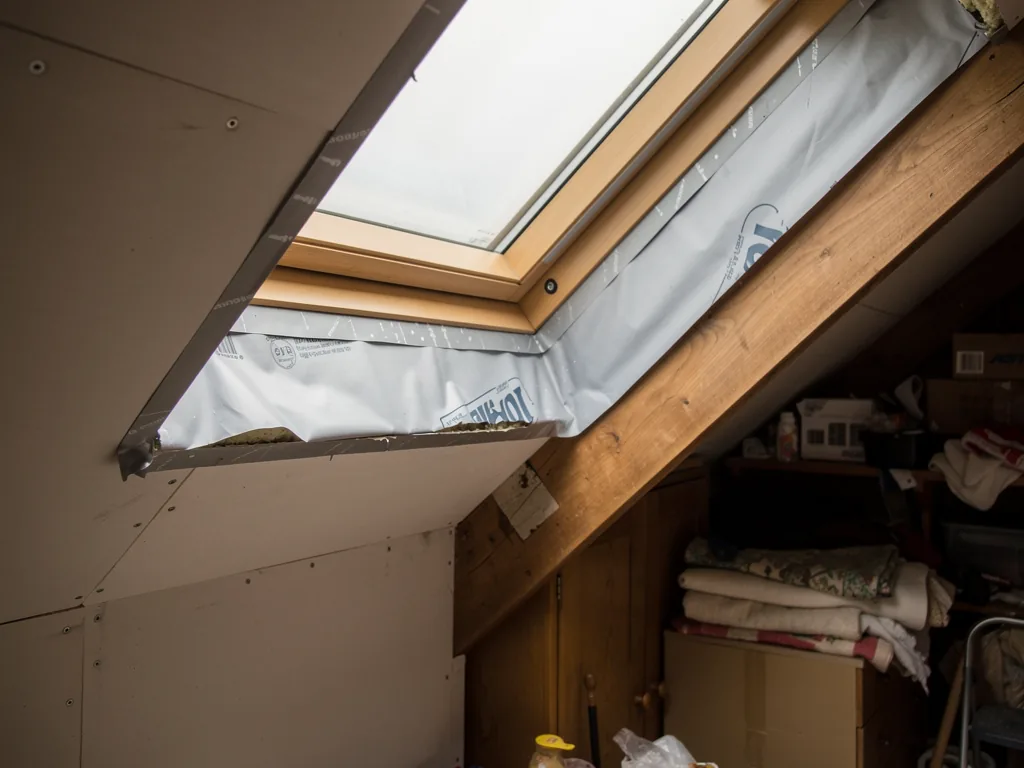
This is hidden work, and it is the first thing to be skimped when a job runs late. We do it carefully and photograph it before it is covered, and the photographs are yours at handover. If a rooflight is ever questioned, those pictures show what is behind the plaster.
| Trimmers | Fixed to the rafters or joists, framing the opening square |
|---|---|
| Collar or upstand | Insulated to meet the roof's own insulation |
| Vapour control layer | Lapped to the frame and taped, with no gaps |
| Flashing or covering | Dressed so water runs off the collar, not behind it |
| Lining | Insulated reveal, plastered and ready to paint |
Winter
Why people think rooflights are cold, and when they are right
A rooflight faces the night sky, and warm air rises towards it, so it is a more demanding place for glazing than a wall window.
Heat leaves a window in three ways: by conduction through the glass and frame, by radiation to colder surfaces, and by air moving through leaks. A rooflight is hit by all three. The glass looks up at a clear, cold sky on a frosty night, the warmest air in the room is gathered beneath it, and any gap in the seals lets that air out. So an old rooflight can feel noticeably cold even when the room is heated, and a draught from the frame line is a common sign of a failed seal or a gap in the packing.
The good news is that modern units cope with that harsh position far better than old ones, because each of the layers described above reduces one of the three losses. A coating handles radiation, the gas fill and extra panes reduce conduction, and fresh seals and a taped membrane stop the leaks. Our short answer on whether rooflights are cold in winter sets out what to expect from a new one.

Signs your rooflight is losing more heat than it should
- A cold downdraught on the face when you stand beneath it
- Misting between the panes of the sealed unit
- A frame that is cold to touch on winter mornings
- Damp or darkened plaster in the reveal
- A gap you can see daylight through around the sash
Summer
Keeping a sunlit room comfortable in July
Efficiency is not only about holding heat in, and a rooflight that is warm in winter can be uncomfortable in summer unless the glass has been chosen with the sun in mind.
Roof glazing takes the sun at its strongest, and a south or west-facing slope can turn a loft room stuffy by mid-afternoon. Solar control glass carries a coating that reflects part of the sun's heat while still letting daylight through. There is a small cost in light, and some glass looks very slightly tinted when you look at it from the right angle. External blinds and awnings stop the heat before it reaches the glass, which is far more effective than an internal blind, and an opening rooflight lets hot air escape from the highest point of the room.
The right answer depends on the direction the roof faces and on whether the room is somewhere you spend afternoons. A north-facing slope rarely needs special glass, and a south-facing loft office usually does. You can read more in solar control glass for rooflights and the answer on whether rooflights make rooms hot in summer.
Ways to keep a rooflight room cool
- Solar control glass on south and west slopes
- External blinds or awnings that stop heat at the glass
- An opening rooflight at the highest point for hot air to leave
- Internal blinds in the side channels, as a lighter option
Condensation
Condensation on the glass: cause first, cure second
Water on a rooflight tells you that the surface is colder than the air touching it, and the fix depends on whether the surface is too cold or the air too damp.
Warm air carries water vapour, and when it meets a cold surface the vapour turns to droplets. Cooking, showers, drying washing indoors and even breathing add moisture to the air, and a rooflight, being the coldest surface in the room, shows it first. A better inner pane, a warm-edge spacer and a thermally broken frame all raise the temperature of that surface, so condensation forms less often and clears sooner. Extraction in the kitchen or bathroom, and a trickle vent or a rooflight that opens, reduce the damp at its source.
Condensation inside the sealed unit is a different problem. Misting between the panes means the seal has failed and the gas has gone, and the only cure is a new unit, which we cover in our misted and failed rooflight service. Our guide to condensation on rooflights goes into the causes and cures in more depth.
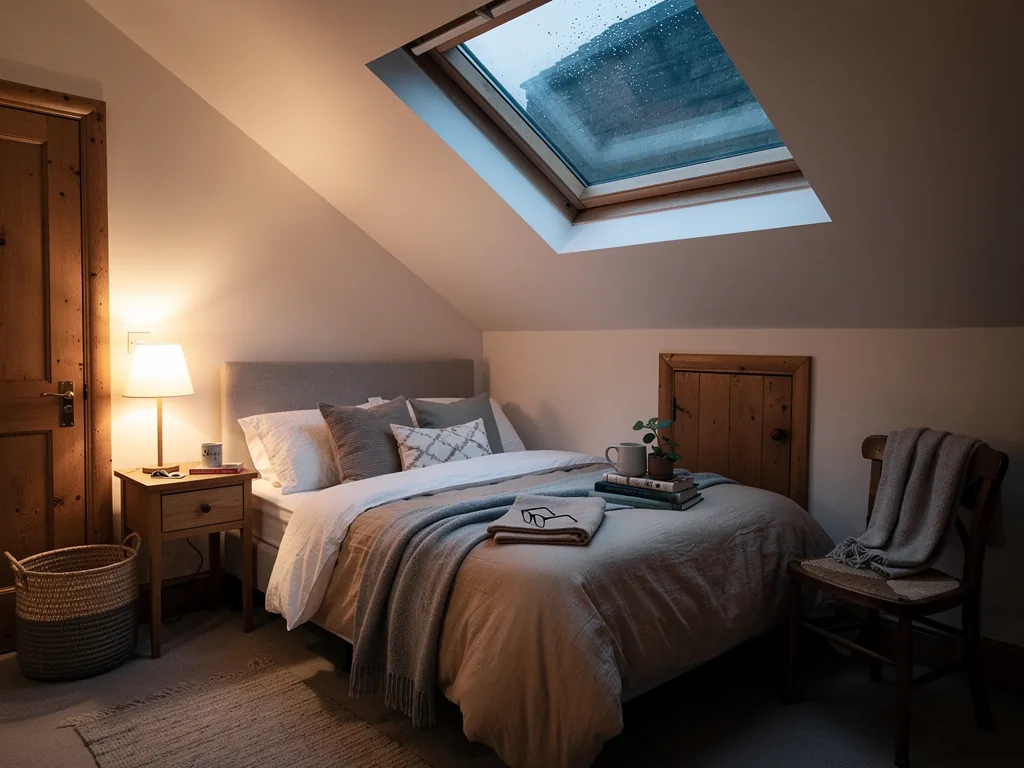
| On the room side of the glass | Damp room air meeting a cold pane: improve ventilation or the glass |
|---|---|
| On the frame or reveal | A cold edge: check the thermal break and the packing |
| Between the panes | A failed seal: the sealed unit needs replacing |
| On the outside of the glass | A clear night cooling the pane, which is normal and clears by itself |
The rules
Building Regulations, Part L and planning
When we add a rooflight or replace a whole one, the work has to meet current thermal standards, and some jobs also need a planning check.
Under Part L of the Building Regulations (the 2021 edition for existing homes), a new or replacement roof window should reach a U-value of 1.4 W/m²K or Window Energy Rating Band B, and a rooflight should reach 2.2 W/m²K. Forming a new opening is a separate matter, because the Building Regulations then look at the framing and at heat loss. If the whole rooflight comes out and a new one goes in, frame and glass together, it is a controlled fitting and therefore notifiable, and the notification is ours to send. Changing just the sealed glass unit does not trigger it. Where a private firm handles the checks rather than the council, it is a registered building control approver, and the paperwork you receive is the same.
On planning, rooflights on a house are usually permitted development under the roof alteration rules, provided they rise no more than 150mm from the roof plane and stay below the highest part of the roof. Where the rooflight faces a side slope, only obscure glass that does not open is allowed, except for an opening part more than 1.7m above the floor. A flat or maisonette has no permitted development rights for this, and a listed building asks for listed building consent. Conservation areas can carry an Article 4 direction that withdraws the rights from certain streets, so the council has the final word. Every condition is laid out in our planning and Building Regulations guide.
| Roof window, new or replaced | 1.4 W/m²K or Window Energy Rating Band B |
|---|---|
| Rooflight, new or replaced | 2.2 W/m²K |
| Whole rooflight replaced | Notifiable controlled fitting |
| Sealed unit only | Not notifiable |
| House in a conservation area | Check for an Article 4 direction with the council |
| Flat or maisonette | Needs planning permission |
Your EPC
Rooflights, energy performance certificates and running costs
A rooflight improves comfort and daylight for certain, but its effect on an EPC and on a heating bill is smaller than people hope and depends on what it replaces.
An Energy Performance Certificate rates a whole home from its fabric and heating, and the assessor looks at windows and rooflights as part of that survey. Replacing a failed single-glazed unit with a modern one helps the fabric score, but the largest recommendations on most certificates concern loft insulation, walls and the heating system. Whether the change shifts a band depends on the home and on the assessor's inputs, so we would not promise a movement in rating. What we can promise is that the new unit is properly specified and its figures are on paper.
The same is true of running costs. A rooflight cannot reduce a bill on its own, but a cold, leaking one can add to it, and a new unit that stops the loss will help. If you want the fuller picture, our answer on whether a rooflight can improve an EPC rating goes through what the assessor looks at.
Treat the EPC as a by-product, and judge the rooflight by how the room feels on the coldest morning.
From a survey of a bungalow near Haxby
Useful papers to keep for an EPC or a sale
- The product details with the whole-window U-value
- The Building Control completion certificate
- The makers' warranties
- Our 10-year workmanship guarantee
Existing rooflights
Upgrading what you already have
Many York homes have a rooflight from an earlier extension or conversion that was glazed to the standards of its day, and a few clear choices cover most of the upgrades.
If a roof window is sound but its glass is failing, a new sealed unit may be all it needs, and it is the lightest-touch option. If the frame is cold, warped or leaking air, replacing the whole window in the same opening brings the thermal performance up to current standards and gives a new sash and seals. Where the existing rooflight is a plastic dome or a flat panel from a 1980s extension, we usually recommend a modern flat rooflight on an insulated upstand, which suits a flat roof much better. In a pitched roof, a roof window in the same opening is the natural swap, and on a flat roof a flat rooflight does the job. In an older house where slim frames matter, a conservation rooflight offers a very low profile with good thermal figures.
Choosing the scale of the upgrade
- Glass only: the frame is sound and a new unit fits it
- Whole unit: the frame is cold, warped or the seals have gone
- New type: a dome or old panel replaced with a modern rooflight
- New opening: a different position, with new trimmers and lining
On the written quote every option has a line to itself, which makes plain what the cheaper route would leave in place.
Your day plan
What the fitting days look like in your home
Swapping a rooflight is a short job on paper, and a plan for each day keeps it that way in a house where people are living.
First we cover the floors, stairs and furniture on the way in, and put up a screen around the working area if the layout lets us. A delivery, a child's nap or a day spent at your desk is worth mentioning at the survey, so the timings can bend around it. By evening the roof is sealed, either because the new unit is in or because a fixed temporary cover is. Waste goes away with us, and one team does the job from first dust sheet to handover.
A typical energy upgrade
- ProtectFloors, stairs and furniture covered, work area screened off.
- Strip and frameOld unit removed, opening checked and the trimmers set square.
- Fit and insulateNew unit set, collar or upstand packed, membrane lapped and taped.
- Line and hand overReveal lined and finished, the area cleaned, the papers walked through.
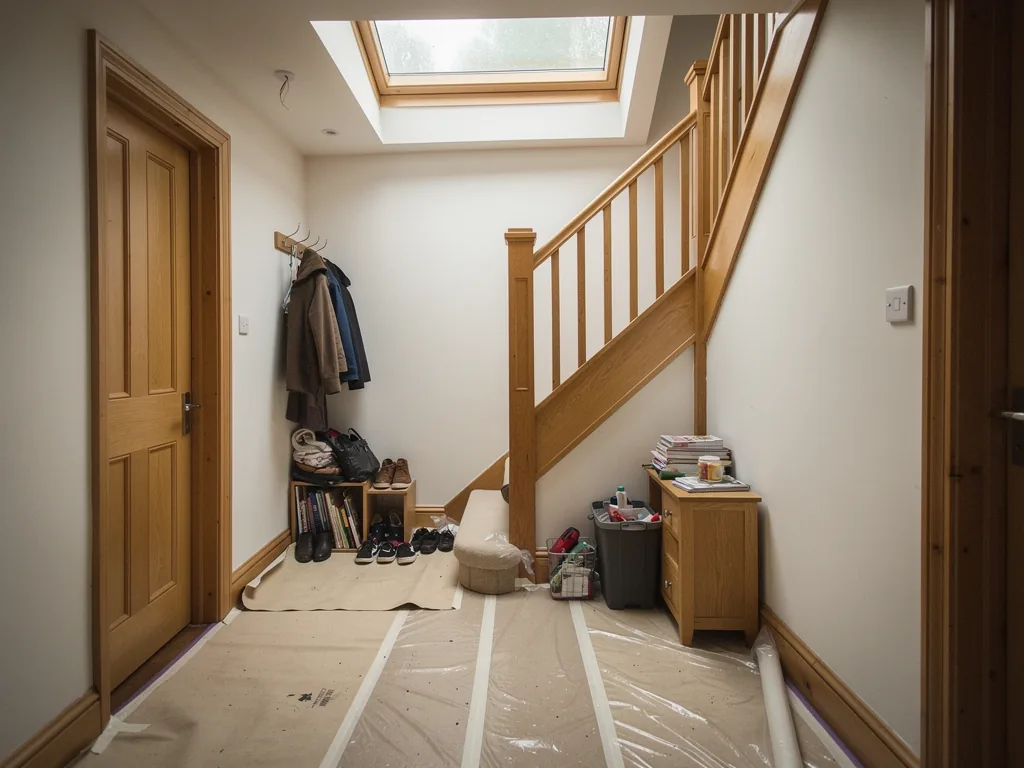
Plaster needs a little time to dry before it is painted, and the plan says so in advance.
Handover
The paperwork, the guarantee and looking after the glass
When the work is finished we walk you round it and leave you with every document you might want later.
A well-fitted rooflight needs very little attention. Wash the glass a few times a year, keep gutters and valleys clear, and wipe condensation from the frame on cold mornings. We show you how to operate any opening sash, how to adjust the blinds and what to avoid putting on the glass. If you ever sell the house, the handover pack answers the questions a buyer's surveyor is likely to ask.
Your handover pack
- Product details, including the whole-window U-value
- The makers' warranties for the unit and the glass
- Our 10-year workmanship guarantee, in writing
- Building Control paperwork if the job needed notifying
- Photographs showing the opening before it was closed up
- Care notes for the glass, frame and seals
The guarantee covers our workmanship, including the opening, the insulation and the weathering into your roof, and the details are on our guarantee page. To start with a free survey, use the form below.
Related pages on energy efficient rooflights
Guides
Tell us about the room
Say what the room is like and which rooflight you have now, and a free survey will be booked, with a written quote afterwards that gives each cost a line of its own.
- Free survey at a time that suits you
- A written quote and a plan for each day
- 10-year workmanship guarantee
Prefer a message? WhatsApp us on 07880 284133